



10 Criteria for Choosing Toys That Grow with Each Developmental Stage
Choosing toys for little ones can feel overwhelming when labels promise developmental benefits but give little practical guidance. Where should you start to pick toys that truly suit your child’s stage and support their physical, cognitive, and social development?
This guide outlines ten practical criteria, from safety and sensory variety to motor skills, cognitive, language, and imaginative development, to help you choose toys that grow with your child. Read on for practical tips, clear examples, and quick questions to ask when evaluating toys so each choice becomes a purposeful tool for learning and play.

1. Match toys to your baby's developmental milestones
Match observable milestones to specific toy qualities, and use clear examples to make choices practical. For visual tracking, pick toys with high-contrast patterns. For grip development, choose graspable rings. For hand-eye coordination, select stackable pieces. For early problem solving, offer cause-and-effect toys. For social role play, provide figures or props. Watch for readiness cues during play, such as independent exploration, repeated actions, or visible frustration, and adjust the level of challenge accordingly. If a child repeats a skill easily, increase complexity with smaller parts, new rules, or layered tasks. If a child gets stuck, simplify the toy, give a brief prompt, and try again after a short practice. Noting these behaviours helps you focus practice on one or two skills while keeping play engaging and achievable.
With a little imagination, one toy can become a sequence of short games that build a child's skills. Change the rules, add a constraint, introduce a simple tool, or combine sets to create new challenges, for example, hide objects to practise searching, require two-step actions to retrieve a reward, or turn stacking into a balancing task. Define measurable learning targets and record observable outcomes such as attempts, successes, or completed repetitions, then look for transfer, meaning when the child uses the same skill in a different activity. Factor safety, sensory needs, and accessibility into your choices by favouring appropriate textures, low sound levels, and clear colours. Avoid small detachable parts for children who mouth objects, and choose washable materials. As skills change, adapt play by altering grip size, adding supports, or simplifying rules so the toy remains usable, and reassess targets regularly to guide the next adjustments.
Offer varied pieces that grow with each milestone.

2. Prioritise safe, age-appropriate design and materials for baby products
When choosing toys for babies and toddlers, start by checking the labelled age range and carrying out a few simple physical checks. Try the small-part test, tug at seams and attachments, and probe for any sharp edges or pinch points. Make sure battery compartments are screw-secured, because loose pieces and accessible button batteries can cause choking or serious internal injury if swallowed. Prefer toys made from non-toxic, durable materials with smooth finishes and firmly adhered colours or coatings. Choose fabrics that are wipe-clean or machine washable to keep items hygienic. Avoid brittle plastics and loose fibres, which can fracture or shed and create new hazards during normal play.
Think about a toy's features as well as its age label. Infants benefit from large, easy-to-grasp cause-and-effect elements that help early learning. Toddlers gain the most from items that support gross and fine motor practice, such as stacking cups or push-and-pull toys. Older children do best with toys that offer adjustable complexity or modular pieces, so a single item can grow with them and remain challenging. Look for removable parts or several difficulty settings to extend a toy's usefulness while keeping safety in mind. Check sensory features too: choose toys with adjustable volume and simple light patterns rather than bright flashing or loud, unchangeable sounds. Be mindful of materials that commonly trigger allergic reactions, such as latex or some natural fillings, and opt for alternatives if sensitivity is a concern. Inspect toys regularly for wear, loose fastenings, or damaged seams. Repair or remove items when their integrity fails. Keep purchase records, including model names and batch numbers, so you can quickly check official consumer safety sites for recalls or safety notices.
Store toys safely with a sturdy, child-friendly box

3. Encourage sensory exploration to support newborn learning and bonding
After ensuring safety and appropriate materials, match sensory complexity to your child's stage. In the earliest months, babies respond best to high-contrast visuals and simple, gentle sounds; as attention and hand-eye coordination improve, gradually introduce layered textures, varied tones, and toys with clear cause-and-effect. Favour multi-sensory, open-ended items that combine touch, sight, and sound. Research in developmental psychology suggests varied sensory input helps build stronger neural connections, and allowing babies to explore independently supports learning across the senses. Practical examples: for very young infants, try black-and-white cards, board books with bold patterns, and soft rattles with a single, gentle tone; from around four to six months, add contrasting fabrics, textured teethers, and simple manipulatives like buttons, sliders, and flaps to encourage fine motor practice, tactile discrimination, and problem solving.
Check safety and hygiene first: choose non-toxic materials, avoid small detachable parts, and pick toys with surfaces that withstand regular cleaning. Look for items with adjustable sensory intensity, such as removable elements or volume controls, to help prevent overstimulation while still allowing your child to progress. Watch how your child reacts to different textures, sounds, and patterns, then rotate, modify, or replace toys to raise the challenge or ease the sensory load. Use those observations to personalise your choices and build a tailored sensory diet, a balanced plan of sensory experiences that supports gradual skill development.
Introduce multi-sensory stacking to build coordination and exploration

4. Encourage your baby's gross motor skills with playful activities
Match a toy's features to the gross motor skill a child is learning. Low, stable toys encourage reaching and pivoting for babies who are practising sitting and early crawling. Push toys with a sturdy handle and a low centre of gravity help when a child is pulling to stand. Ride-ons and wide-based balance aids support upright posture, steadiness, and confidence as walking and running emerge. Look for toys offering adjustable difficulty or multiple ways to play, so one item can meet different stages. Increase the challenge gradually: change the surface or terrain, add small obstacles to step over, ask for a few more repetitions, or combine actions so new tasks build on existing skills rather than replacing toys. Use movement quality to guide progression. Smoother movement patterns, reduced fatigue, and greater speed or confidence are good indicators a child is ready for the next level of challenge.
Focus on the vestibular and proprioceptive systems with movement-rich play. Simple activities such as swinging, rocking, crawling through tunnels, and rolling on mats give children important sensory input. Research suggests these kinds of stimuli can support better coordination and attention as children grow, so include games that ask them to carry weight or push against resistance to improve spatial awareness and body control. Encourage safe risk-taking with low climbing structures, stepping stones, and small platforms with handholds. Supervise closely, check for hidden hazards, and let children attempt slightly challenging moves so they learn motor planning through controlled falls and recoveries. Choose toys and activities that build bilateral coordination and core stability. Large balls for throwing and kicking, two-handed push-pull toys, and ride-ons propelled by the feet all demand whole-body effort and both sides of the body working together. When you notice smoother movement, less fatigue, and quicker, more coordinated actions, introduce more complex movement patterns or add a second task to keep progress going.
Support steady first steps with a sturdy push-along.

5. Help develop your baby's fine motor skills and hand-eye coordination
When choosing toys, pick items that invite a range of grips, textured surfaces, and small movable parts so babies can practise grasping, pinching, and precise release. You will notice hands move from whole-hand grabs to thumb and forefinger precision, reach-to-grasp speed up, and aiming become more accurate. Match toys to three early stages: the early grasping stage, the pincer-grip emergence stage, and the precise-manipulation stage. For example, start with soft rattles and squishy graspables for early grasping; introduce transfer-and-drop toys and stackable pieces as the pincer grip develops; then offer lacing toys or simple interlocking puzzles to encourage precise manipulation. Each toy should target the specific hand movements and visual tracking needed at that stage. Vary size, weight, and targets. Smaller, lighter pieces encourage finer control, moving parts teach timed release, and clear visual targets promote more accurate reaching.
Turn play into practice with short, repeatable tasks that build fine motor skills and tactile awareness. Try simple activities such as transferring beads with child-safe tweezers, posting coins into slots, threading large laces, peeling and sticking stickers, or squeezing modelling compound. These exercises practise precision, bilateral coordination, and tactile discrimination. Advance tasks by making objects smaller, adding a small visual target, or asking a child to use both hands together. Choose materials that are non-toxic, easy to clean, and have parts sized to reduce choking risk at early stages. Look for securely attached components and a mix of rigid and malleable textures to give clear sensory feedback, plus adjustable-resistance elements, visible targets, and stable bases that support precise reach and placement. Measure progress with short, observable benchmarks, for example completing a three-piece puzzle unaided, consistently using a pincer grip, or transferring a set number of objects with tweezers. When a child completes tasks reliably, rotate toys, combine bilateral tasks, or move to slightly advanced variants.
Supports fine-motor precision with simple peg-and-hammer play

6. Encourage early thinking and problem solving in babies
Choose toys with adjustable challenge levels and a clear sense of progression. Modular sets where pieces can be added or removed work well because they let you place tasks just beyond a child’s current ability, encouraging growth; aim for a success rate of around 70 to 80 per cent to keep motivation high without removing challenge. Favou r open-ended, multi-solution toys, such as building sets and sorting systems, which allow children to approach the same problem in different ways and develop flexible thinking and transferable problem-solving skills. Look for mechanisms that make cause and effect visible and testable — for example, interlocking pieces, simple levers, and flow-based systems — so children can form predictions, run quick trials, and see immediate feedback. Finally, observe how a child interacts: repeating one strategy can mean they are consolidating a skill, while experimenting with different approaches is a strong sign of deeper learning and adaptability.
Choose activities that gently challenge working memory, sequencing, and planning, such as puzzles with increasing piece counts, multi-step construction tasks, and games that need moves in a set order. Break each activity into clear steps and ask the child to verbalise a plan before they start — this makes hidden steps visible and encourages organised thinking. Track progress simply by noting how many steps they complete without prompts, and keep a short record over several sessions to see gradual improvement. Offer only minimal hints that nudge the child toward a solution rather than solving it for them. Scaffold learning through guided play: model one strategy, step back so the child can try independently, and focus praise on the strategy and effort they used. This approach builds resilience and helps children apply the same skills to new problems.
Try an adjustable water track to explore cause-effect.

7. Encourage language, social, and emotional development from birth
Offer playthings that invite back-and-forth interaction, such as puppets, toy telephones, and picture books. When you prompt, pause briefly and keep a simple count of conversational turns. Conversational turn-taking predicts vocabulary growth and stronger listening skills, so prioritise activities that prompt spontaneous responses and try to introduce one new word in each interaction. Use play materials that encourage joint attention, such as simple cause-and-effect toys, picture books, and stacking games, then follow the child’s lead and comment on what they notice to support broader language acquisition.
Build a child’s emotional vocabulary with toys that show clear facial expressions and simple role play. Use emotion cards, dolls, or figurines, and regularly name feelings while inviting the child to copy the expressions. Hearing labels for emotions and practising them helps children recognise feelings in themselves and others and supports early self-regulation, so also practise coping actions such as deep breathing, asking for help, or taking a quiet moment. Encourage symbolic and narrative play with open-ended props, dress-up items, blocks, or small-world sets. Start a short pretend scenario, introduce a few target words, then invite the child to extend the story. This kind of play builds language, sequencing, and perspective-taking. Use cooperative activities, simple board games, and turn-taking games to teach social rules, sharing, and problem-solving. Model fair play, prompt the child to suggest solutions as challenges get harder, and celebrate effort as their skills grow.
Pair hands-on play with storytime to spark language

8. Encourage imaginative, symbolic, and pretend play to spark early creativity
Research shows that children who regularly engage in imaginative play develop richer vocabularies, tell more complex stories, regulate their emotions more easily, and take other people’s perspectives more readily. The toys you provide can help shape those gains. Choose open-ended toys that can be used in many ways: modular sets that combine differently, items with realistic textures, and pieces that invite role play. Avoid kits that insist on a single outcome or come with prescriptive instructions, as these limit the chance to invent stories. Keep a visible loose-parts box: fabrics, scarves, wooden blocks, buttons, ribbons, and small household objects. When children can recombine familiar items, spontaneous transformations and new narratives follow.
A few small, intentional prompts can turn everyday moments into rich pretend play that children steer themselves. Try offering a one-line character idea, adding a single surprising prop to shift the story, asking open questions about motivations, then stepping back and letting the child lead. Minimal intervention gives children space to build autonomy and stretch their narrative skills. Make play easy to find and inviting. Arrange accessible low shelves, create a small drama zone, and rotate a selection of props so visibility and variety nudge spontaneous role play. Choose culturally diverse, gender-neutral, and disability-friendly figures, and check for safety risks, such as small parts for younger children. As children grow, gently increase complexity: introduce social dilemmas, multi-character plots, or simple cooperative rules that encourage perspective taking and more sophisticated social negotiation.
Bring a tactile, open-ended farm scene into everyday play.

9. Toys that adapt as your child grows
Select playthings that adapt as your child grows. Look for modular designs with pieces you can add or remove, and settings you can adjust to make a toy easier or more challenging. Reconfigure a toy yourself by swapping parts, changing difficulty, or altering its scale to see whether it supports a child's progression from hands-on exploration to independent problem solving. Prefer open-ended designs that invite tactile interaction, pretend play, and simple cooperative rules. Extend play with small prompts, such as assigning a role, setting a clear goal, or introducing a constraint, and observe whether your child invents rules, combines the item with others, or plays for longer stretches. Seeing those behaviours across several sessions suggests the toy adapts as the child develops.
Pick playthings designed to expand in complexity as your child develops. Look for clear ways to increase challenge, such as optional add-ons, interchangeable pieces, or graduated tasks. You can build your own progression too: add a timer to turn a game into a race, introduce counting challenges, or change rules to make a familiar activity harder. Observe whether your child masters earlier steps before moving on, as that indicates whether the toy supports scaffolded learning. Pick designs that are durable, safe, and easy to clean. Check materials and joints for robustness, and favour items with parts that are simple to replace, or easily substituted with everyday objects if lost. Small spares, like an extra peg or a wooden block, are easier to keep than tiny bespoke components. Prefer items that work well with everyday objects to keep them feeling fresh without having to buy more. Try combining playthings with craft materials or other toys to layer goals and stories: a cardboard box can become a garage, a scarf can become a cape, and stickers can change a character’s role. If they find new uses, or if you spread challenges across different settings, the item will continue to meet their changing developmental needs.
Choose a multi-piece set that grows with your baby.

10. Opt for durable, easy-to-clean materials for long-lasting keepsakes
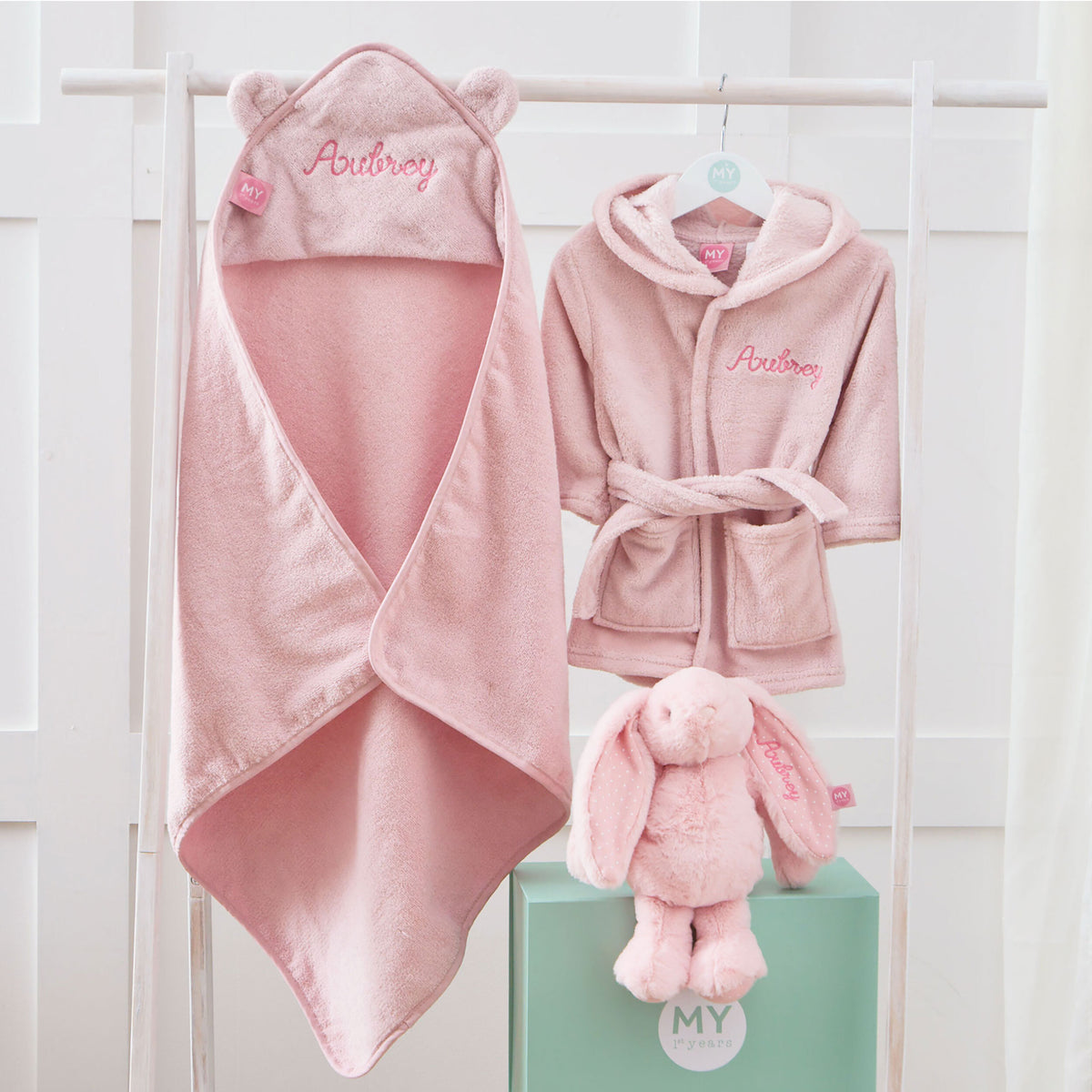
When choosing toys for babies, pick materials that stay clean and resist germs. Sealed solid wood, food-grade silicone, and hard plastics tolerate repeated washing and do not harbour moisture the way porous fabrics or untreated wood can. Look for toys designed to survive common cleaning methods, for example, machine-washable soft toys, items that cope with warm soapy water, those safe for steam sterilisation, or pieces that can go on the top rack of the dishwasher. Prefer designs with removable covers and sealed electronics so you can clean without damaging function. Simple construction also helps: smooth joins, rounded shapes, recessed fastenings, and few crevices make cleaning quicker and reduce places where dirt and bacteria can collect, which matters most for toys that babies mouth or use for early sensory play.
Think about longevity as part of your cleaning routine. Choose materials that stand up to repeated washing so toys keep safe edges and reassuring textures as children grow. Sandable woods, durable silicone, and robust plastics resist cracking, tearing, and general wear better than softer finishes. Before regular use, run a quick cleaning trial: wipe or wash the toy as you plan to, then inspect for colour change, swelling, loose parts, or weakened seams. If the finish fades, swells, or fastenings loosen, that toy will need gentler care or replacement. Keep a short maintenance habit: remove detachable parts, dry items completely, and replace any pieces that show damage. Designs with few crevices and sealed components are easier to clean and tend to last longer.
Thoughtful toy selection follows ten practical criteria to match playthings to a child's changing abilities while supporting sensory, motor, cognitive, and social development. By prioritising safety, choosing adaptable, multi-sensory designs, and setting simple, observable goals, parents and carers can create scaffolded practice that helps children make clear, measurable progress in specific skills.
When evaluating or rotating toys, use these guide headings: safety, sensory, gross-motor and fine-motor skills, cognition, language, imagination, adaptability, and cleanliness. Observe signs the child is ready, note small milestones, and gently raise the difficulty so play stays engaging and the child can regularly reach the next milestone.
Share


