


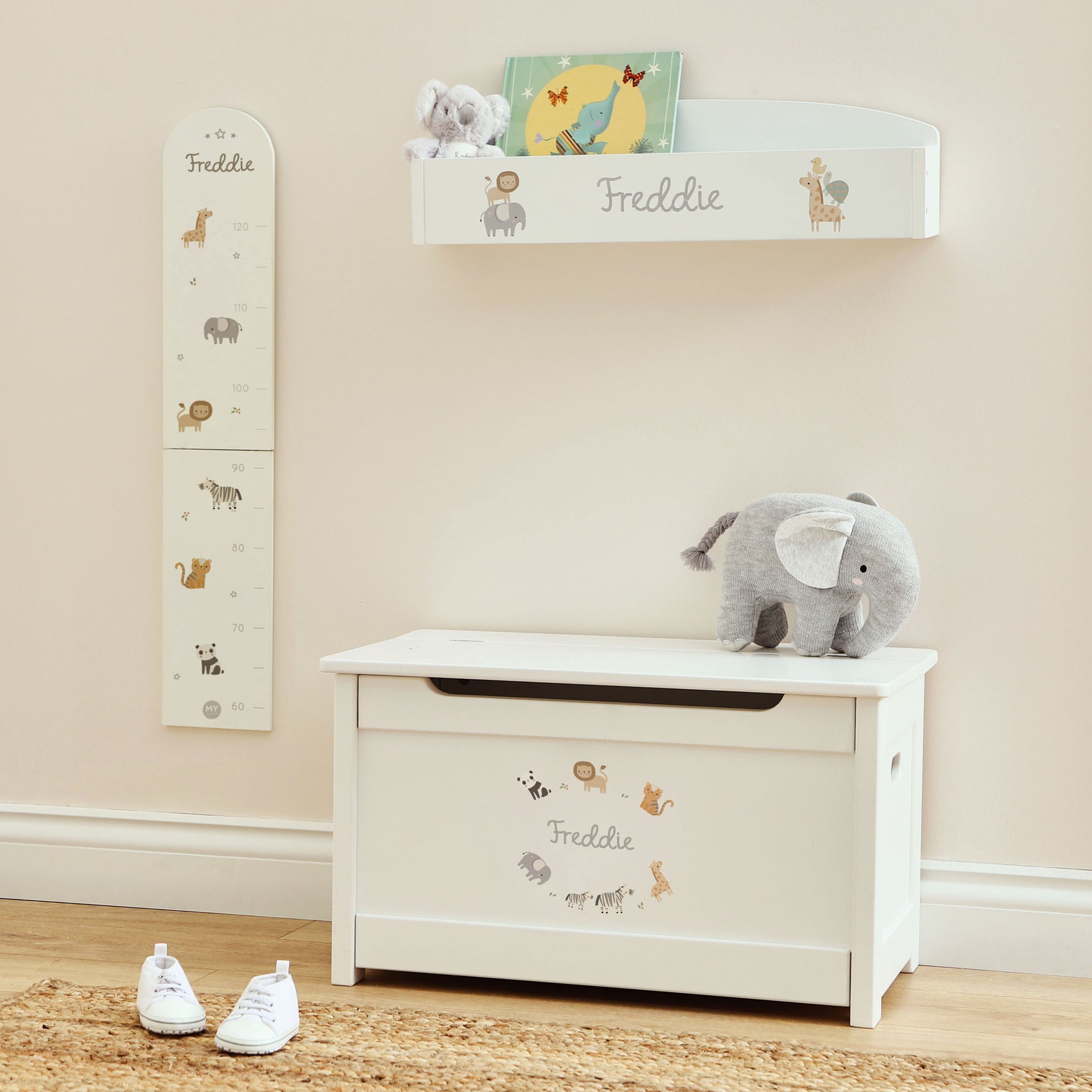
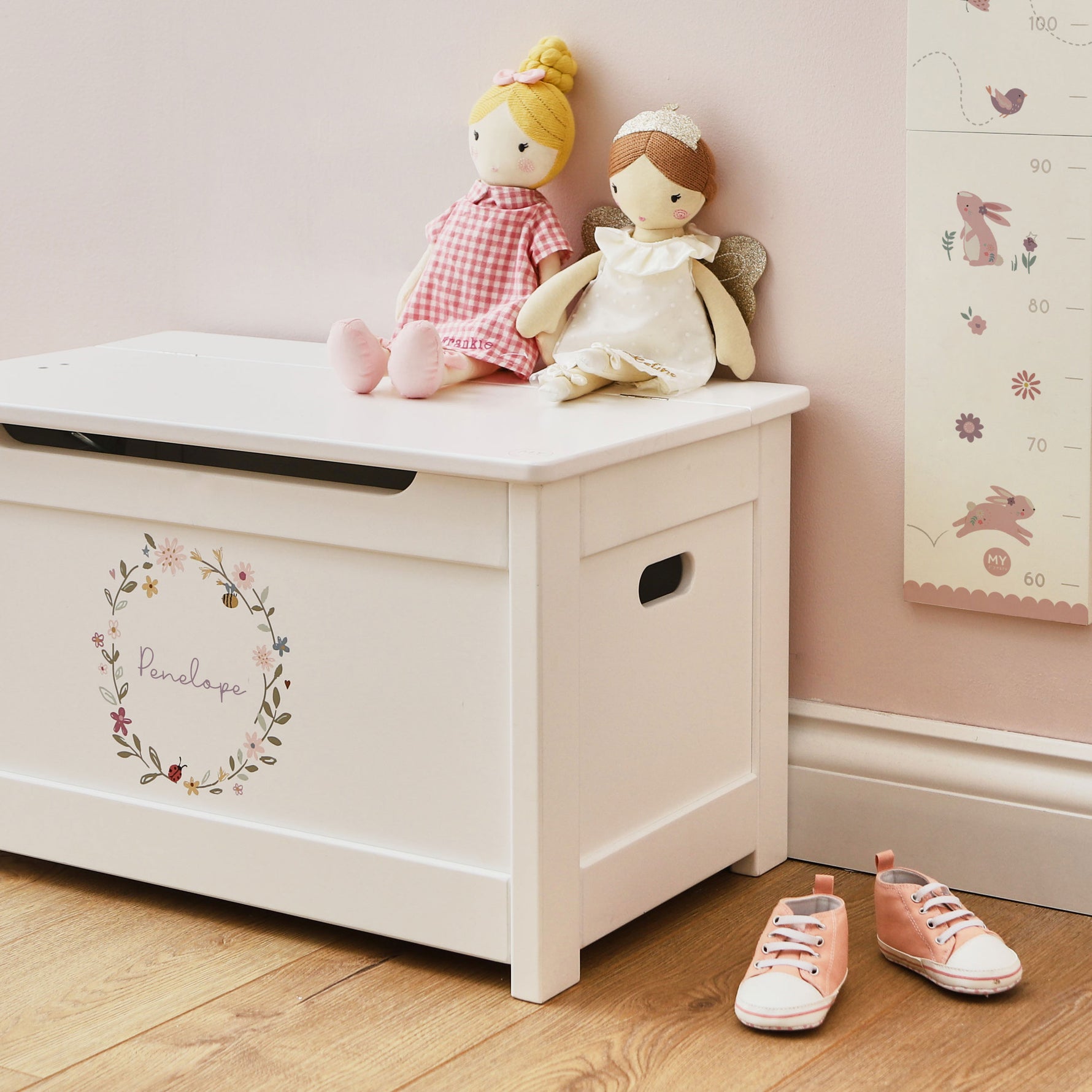

Toys can build up in a nursery before you realise, turning tidy mornings into a scramble and leaving small items as trip or choking hazards. Choosing a toy box that fits your space, holds the right number of toys, and keeps everything organised makes tidying quicker, reduces safety risks, and saves you time.
This practical guide helps you measure your play area and work out the ideal toy box dimensions, estimate storage capacity while planning for toy rotation and future growth, and choose durable, child-safe materials with organised storage features. Use the step-by-step checks below to make toys easy to find and put away, keep small parts contained, and choose a box that adapts as your child’s interests change.

How to measure your play area and set ideal dimensions
Start by measuring the play area precisely. Record the length, width, and ceiling height, and note fixed obstructions such as radiators, door swings, and furniture legs. Sketch the available footprint on graph paper or over a room photo so the toy box becomes part of the room, not an obstacle to circulation, heating, or sightlines. Match the box to the toy mix. Sort toys into categories like soft toys, construction pieces, vehicles, and dolls, measure a few representative items, then work out the interior volume and the largest single-item dimension. That ensures the box will hold many small pieces as well as the occasional oversized toy. Design for accessibility. Measure the toddler's seated and standing reach to set an appropriate lid height and opening width, choose a depth that avoids excessive bending, and confirm an adult can reach the interior for tidying without contorting.
When choosing a toy box, leave spare capacity for toy rotation and changing interests, and think about the largest toys you might add so it can grow with them beyond the toddler years. Prioritise safety: choose rounded edges, soft-close or removable lids to reduce pinch and fall risks, and add ventilation or drainage if you plan to store damp items. Keep clearances around the box to prevent trip hazards, and check the box dimensions against doorways and staircases before you commit to avoid awkward manoeuvres or dismantling.
Measure space first—lift-seat storage matches accessibility and capacity.


Make space for play: calculate toy capacity, plan rotation, and allow room for growth
Begin by measuring each toy and the box in centimetres. Convert those linear measurements into cubic centimetres so you can compare the average toy volume with the box's internal volume. To estimate how many toys the box will hold, divide the box volume by the average toy volume, then apply a packing efficiency factor of 40 to 70 per cent, depending on each toy's shape and flexibility, to allow for irregular shapes and empty space. Keep a record of every measurement so you can update your estimates as the toy collection changes. Simple example: if a typical toy measures 10 cm by 10 cm by 5 cm, its volume is 500 cubic centimetres. If the box's internal volume is 24,000 cubic centimetres, dividing gives 48. Using a 50 per cent packing efficiency suggests you could fit about 24 toys (48 times 0.5).
Choose how many toys to keep accessible at once, and rotate them to keep play engaging. Swap out groups when interest drops so each toy feels new again. Reserve about 20 to 30 per cent of the box's internal volume for larger future toys or seasonal items, and use stackable, removable inserts or small internal bins so you can reconfigure storage as your child grows. Increase storage capacity by nesting items, placing flat or heavy pieces on the bottom, storing small parts in labelled pouches, and grouping toys by play type so toddlers can find and return things quickly. Think about safety and placement as you plan usable space: choose a height your toddler can reach easily, use lids that are safe or removable to avoid finger traps, and locate the box where it will stay dry and ventilated. For messy items, pick a wipeable interior.


Choose durable materials, secure safety features, and organised storage
A well-designed toy chest protects toys and keeps little hands safe. Measure the internal length, width, and height to calculate the cubic volume, then confirm that figure with a simple pack test: fill the chest with a representative selection of the child’s toys to check fit, lid clearance, and how much extra headroom you might need as their collection grows. When comparing materials, weigh plywood, solid wood, moulded plastic, and metal against factors such as splinter risk, moisture resistance, impact resilience, and how easily each can be repaired. Opt for a smooth, non-toxic paint or sealant to reduce surface wear and lower the chance of ingestion hazards. Fit safety features that address common risks: soft-close or stay-open hinges to prevent trapped fingers, rounded corners, and secure fastenings to eliminate small detachable parts. Add ventilation holes to reduce suffocation risk, and include anchor points so an adult can fix the unit to the wall to prevent tipping.
Organise the inside of a toy box around common toy types. Use removable bins, dividers, or trays sized for each group, and label or colour-code compartments to speed tidy-ups, while leaving an open area for favourite toys children reach for most. Before you buy, lift the box when it is partly filled to check the weight feels manageable. Consider lockable castors or floor pads to protect flooring, and make sure the lid can open fully in the room where you plan to use it. Choose wipe-clean interiors or replaceable liners to make maintenance straightforward, and check that any movable parts can be repaired or replaced without specialist skills. Balancing capacity, material, safety features, and internal organisation gives you practical criteria to pick a toy box toddlers can access independently, and adults can maintain and secure over time.
Start with a reality check: measure the space where the toy box will live, then test the box’s real capacity by filling it with the toys your toddler actually plays with. That hands-on test reveals whether a shallow or deep design will work, and whether children can reach and move toys comfortably. Check practical safety details too — lids that stay open, rounded edges, and ventilation holes — and leave a little extra room so the box can grow with your child’s collection.
Treat the measurement, capacity, and material checks in each heading as simple, repeatable steps you can use to avoid surprises and make tidy-ups easier. Apply those checks to any toy box so toddlers can reach it independently, and grown-ups can maintain and secure it, ensuring the storage works now and adapts as interests change.


